Phi Phi Oanh never ceases to amaze me as she experiments
with the properties of traditional lacquer, bending and breaking the rules,
opening new pathways and bewildering the purists. It’s little wonder that I’m
one of her biggest fans…
At L’Espace Phi Phi has mounted a daring exhibition of
lacquer works called ‘Palimpsest’ which is one of those hard to
pronounce without getting your tongue tied in knots words and which comes from Ancient Greek
(palimpsestos) sort of meaning scraped clean.
The Romans used to work on wax coated tablets that could
be smoothed and re-used and Cicero used the term palimpsest to describe the
practice. Later it referred to parchment (in the days when parchments and paper
were expensive scarcities) that was scraped of its original text so that a new
one could be written or drawn on it. Often, and over time, the original text
was often visible by transparency, a palimpsest.
You can still occasionally buy those magic slates for
kids that erases the text when you lift the plastic coated page you initially
wrote on. However you often find that the palimpsest of previous fun appears
like a phantom.
Gore Vidal’s memoir is evocatively titled ‘Palimpsest’
and fits this remarkable novelist so well as it scrapes away the present to
reveal images of the past, scratched and uneven and present a transparent truth
The word crosses many boundaries and in archeology it is
used, simplistically, to describe repetitions of designs on the various layers
of a dig.
It can be used to describe the lines left when an
appliance is removed (a picture frame from the wall!)
I guess those urban walls that are plastered and re-plastered
with posters could use the term and in Paris a permanent street art project is
named Palimpsest and local and international artists coat and recoat Francois
Mitterrand Mall with works on paper that are eventually covered by another’s
paper work.
And I also like this
piece, of the same name, commissioned for the San Francisco Museum
of Modern Art and for the aging baby boomer rockers here’s an attempt by
Palimpsest 9 to reconstruct a Cure hit:
And a You Tube clip of a palimpsest performance during
Superformances in Strasbourg which pushes the term into the avant garde.
Which brings me back to Phi Phi and her ‘Palimpsest’
exhibition which definitely stretches her lacquer concepts and techniques into
the avant garde.
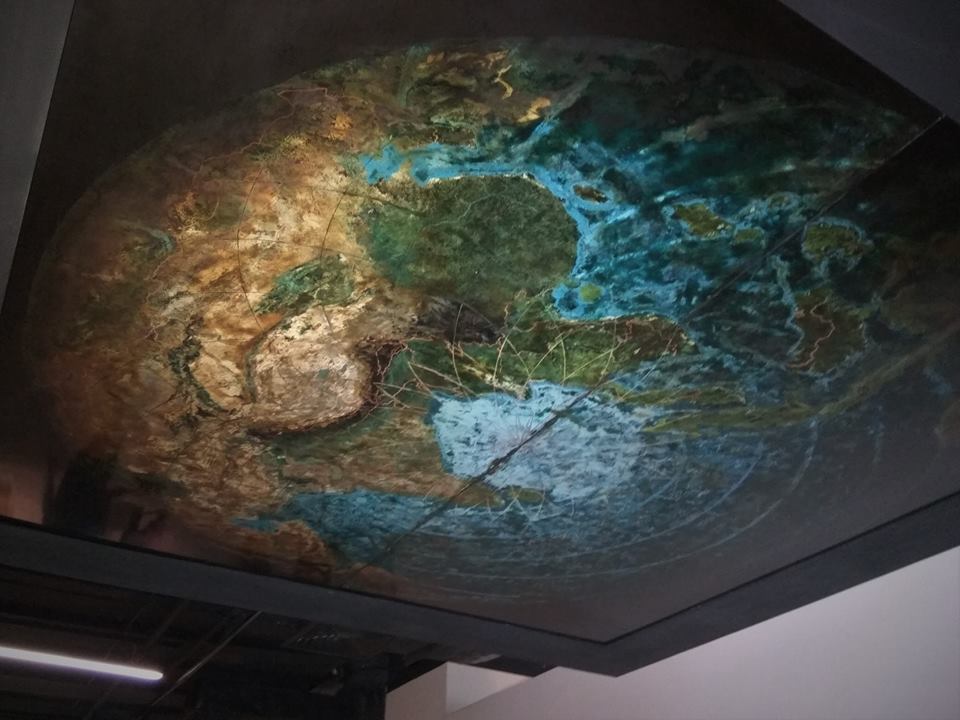
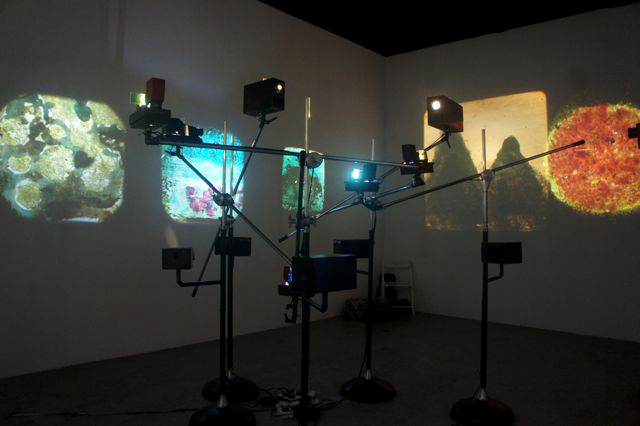
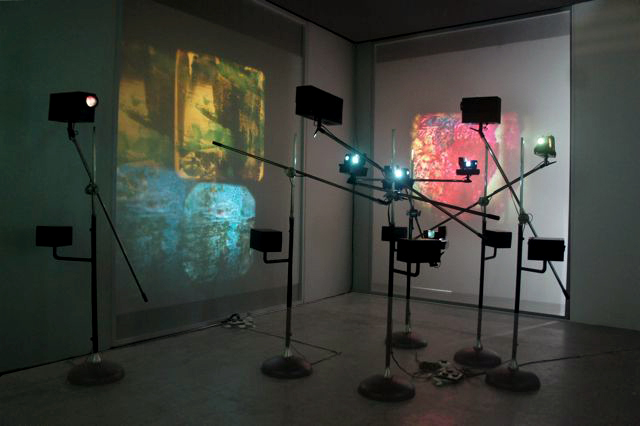
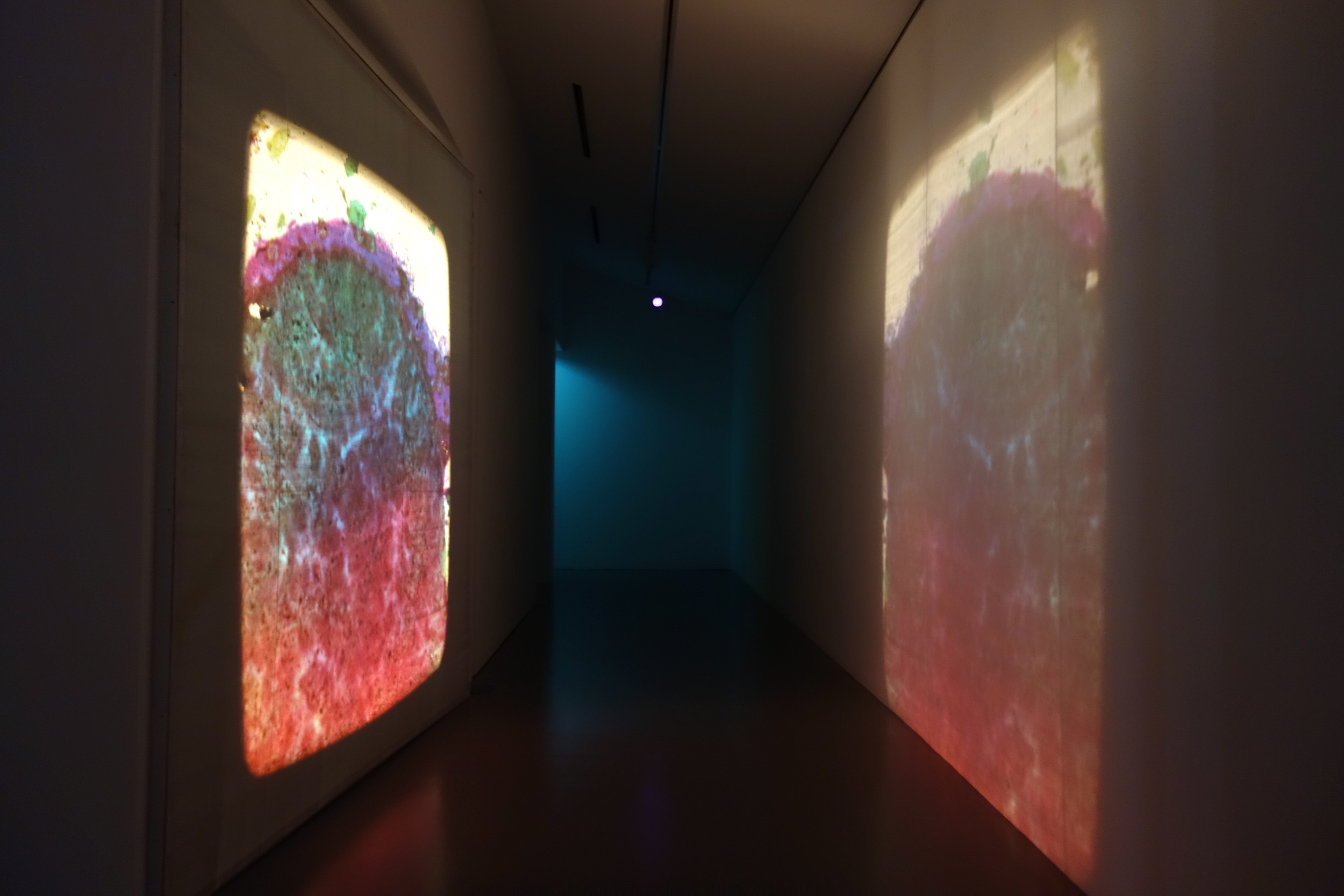
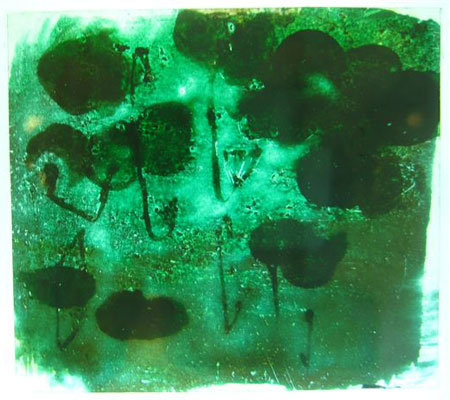
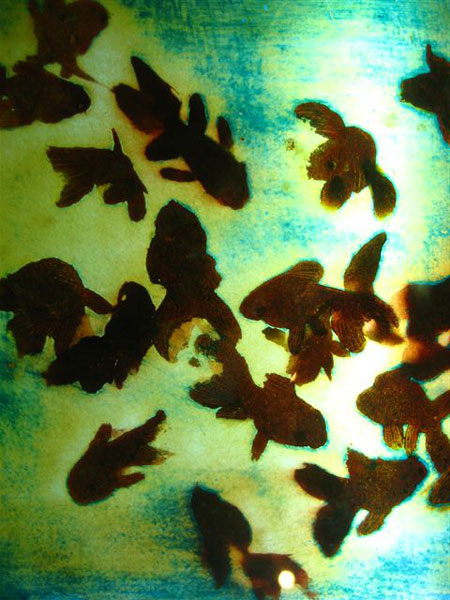
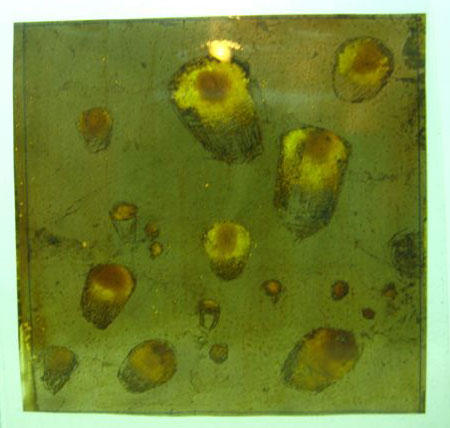
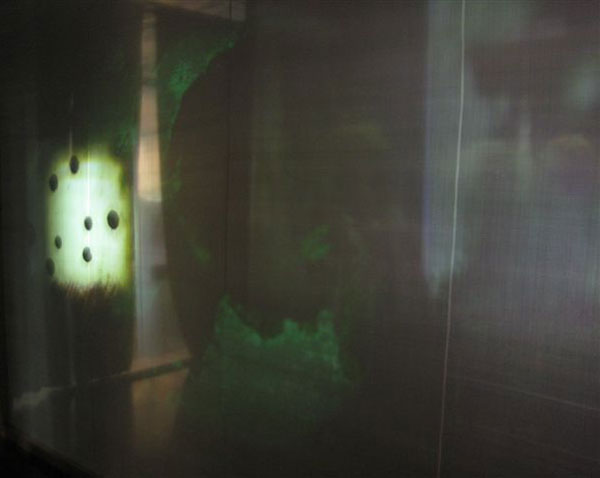
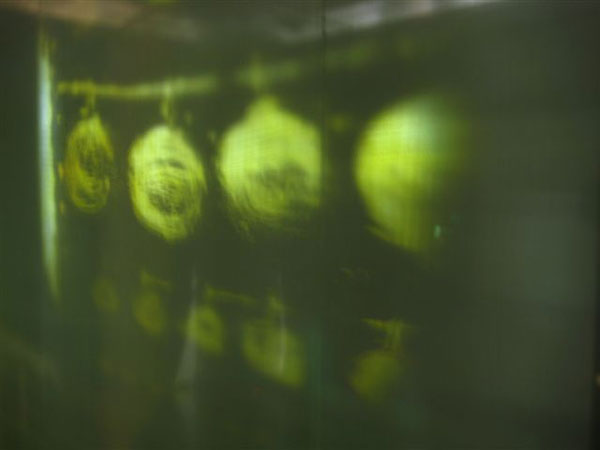
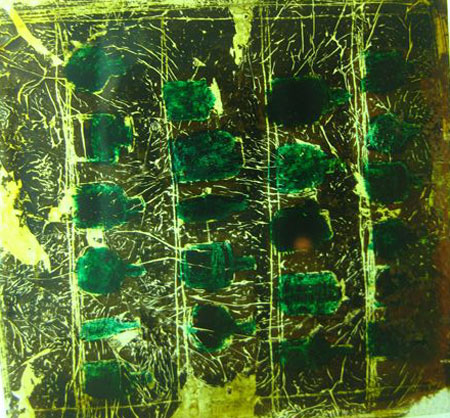
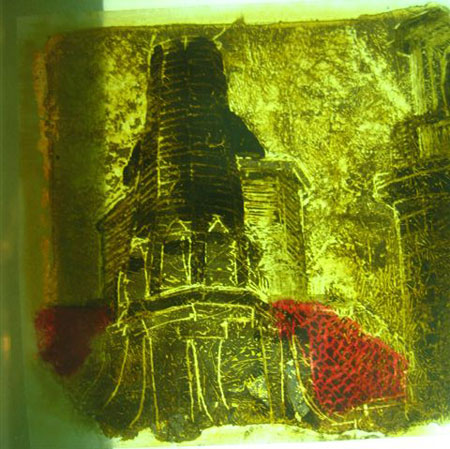
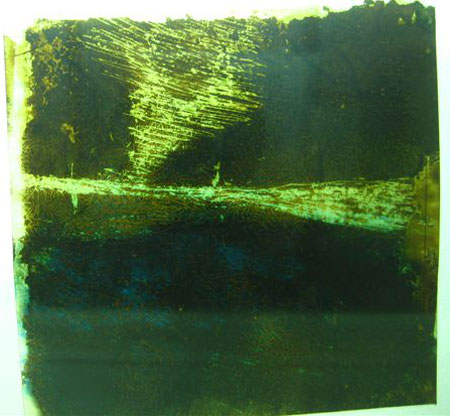
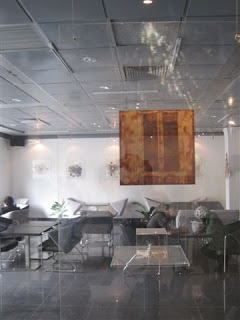
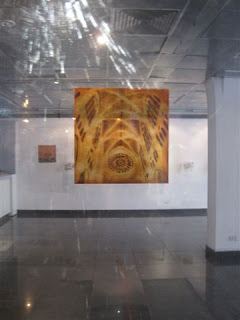
Phi Phi uses pieces of her last year’s exhibition at L’Espace…lacquer
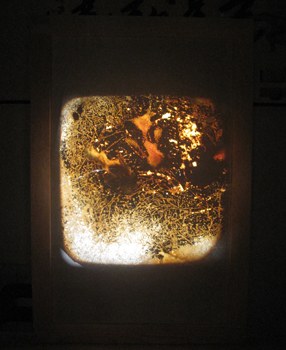
on transparent film, and uses pieces of these as slides in redesigned
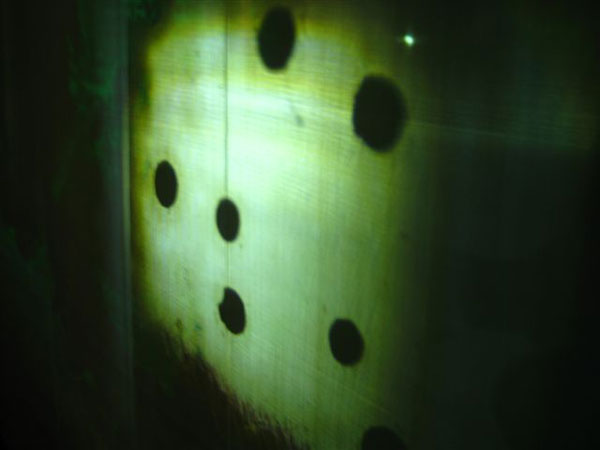
projectors that use led lights. Like slides of medical specimens they are
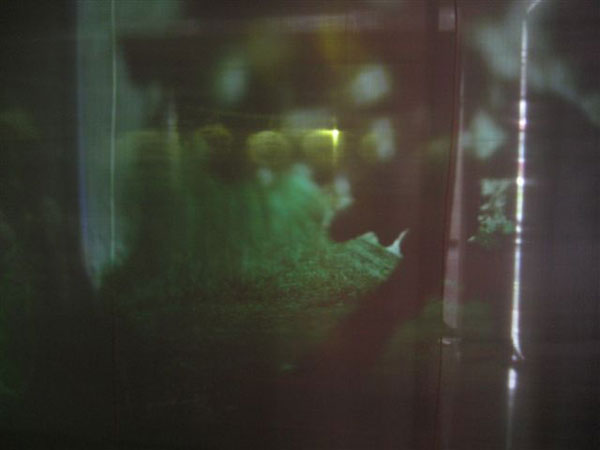
projected onto silk screens stretched over extra large wooden frames in a
blacked out room. The slides are changed during the day so that the
macro/micro images are never the same and so that I don’t get my non scientific
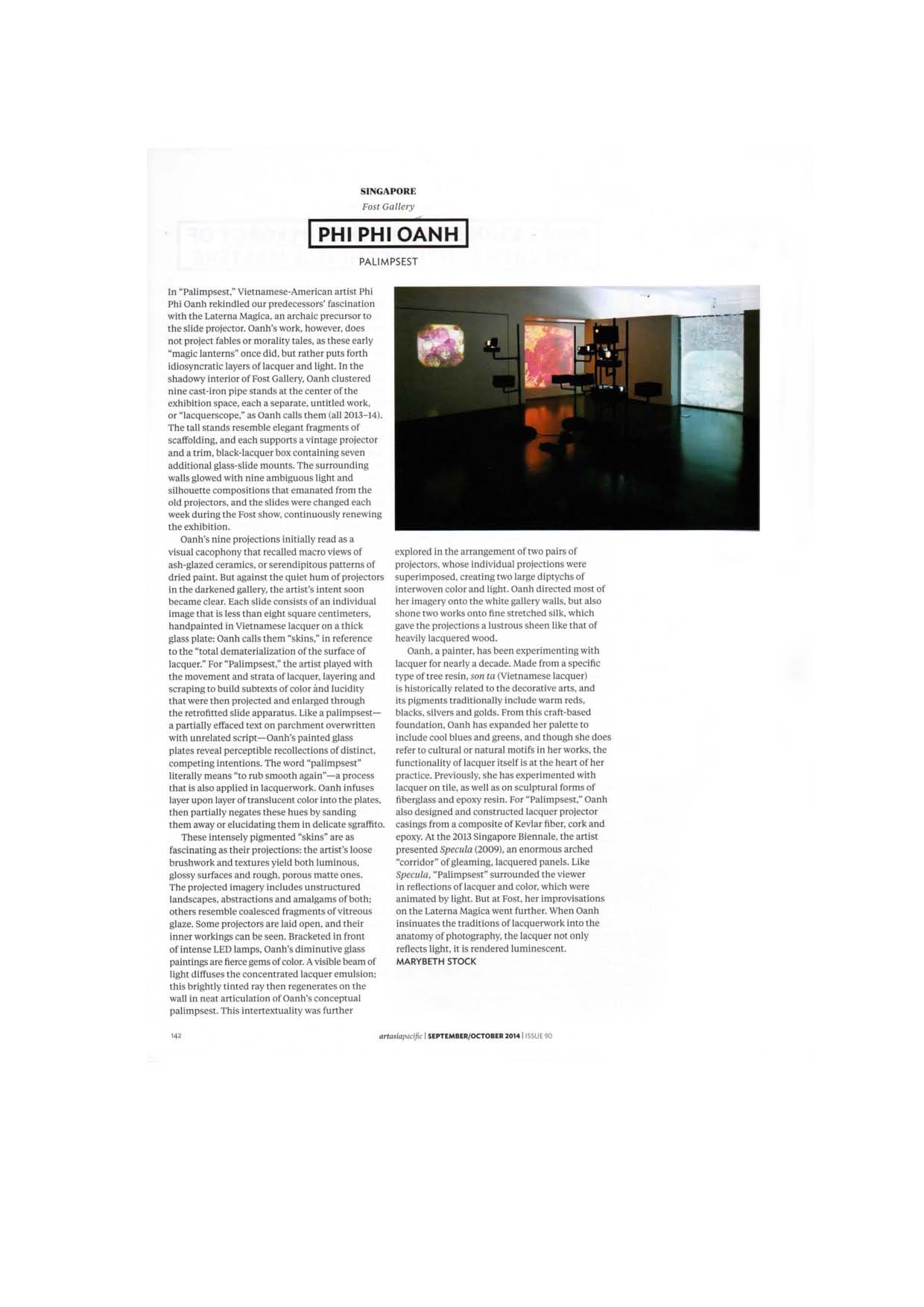
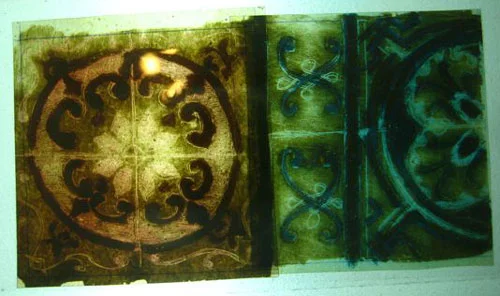
mind tied up in more knots than my tongue, I’ll follow with 3 images of Phi
Phi’s wall statement that have a blurred enough touch to them to be
interpretations of palimpsest statements. The screens can be viewed from a variety of angles and
are almost palimpsest echoes of the very brilliant lacquered metal tunnel she exhibited to enormous acclaim locally and at a
triennale in China.
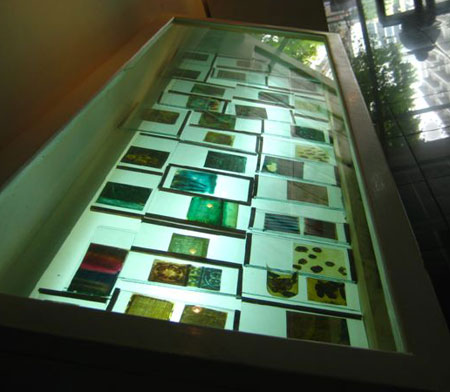
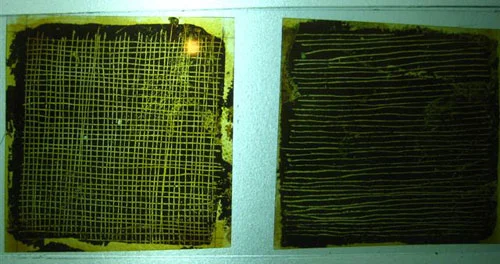
Pieces used as slides are displayed in a side cabinet as are originals, from the previous show
in the same venue.
Ever the exciting innovator and inventor, Phi Phi’s
intent was to have her palimpsest images projected, from the interior of
L’Espace, onto the windows at night, creating a huge screen to be viewed by
passersby. Unfortunately the bright street lights made this almost impossible
so she re-invented, almost on the spot, and constructed the present black box
arena with slides projected onto 3 parallel silk screens by nine modified
projectors…and for those keen to see how traditional mediums and concepts
can be pushed and plasticized, then it’s an exhibition that is sure to excite
and fire imaginations.
As always, I can hardly wait for the next installment.
Kiem Van Tim is a keen observer of life in general and
the Hanoi cultural scene in particular and offers some of these
observations to the Grapevine. KVT insists that these observations and
opinion pieces are not critical reviews.